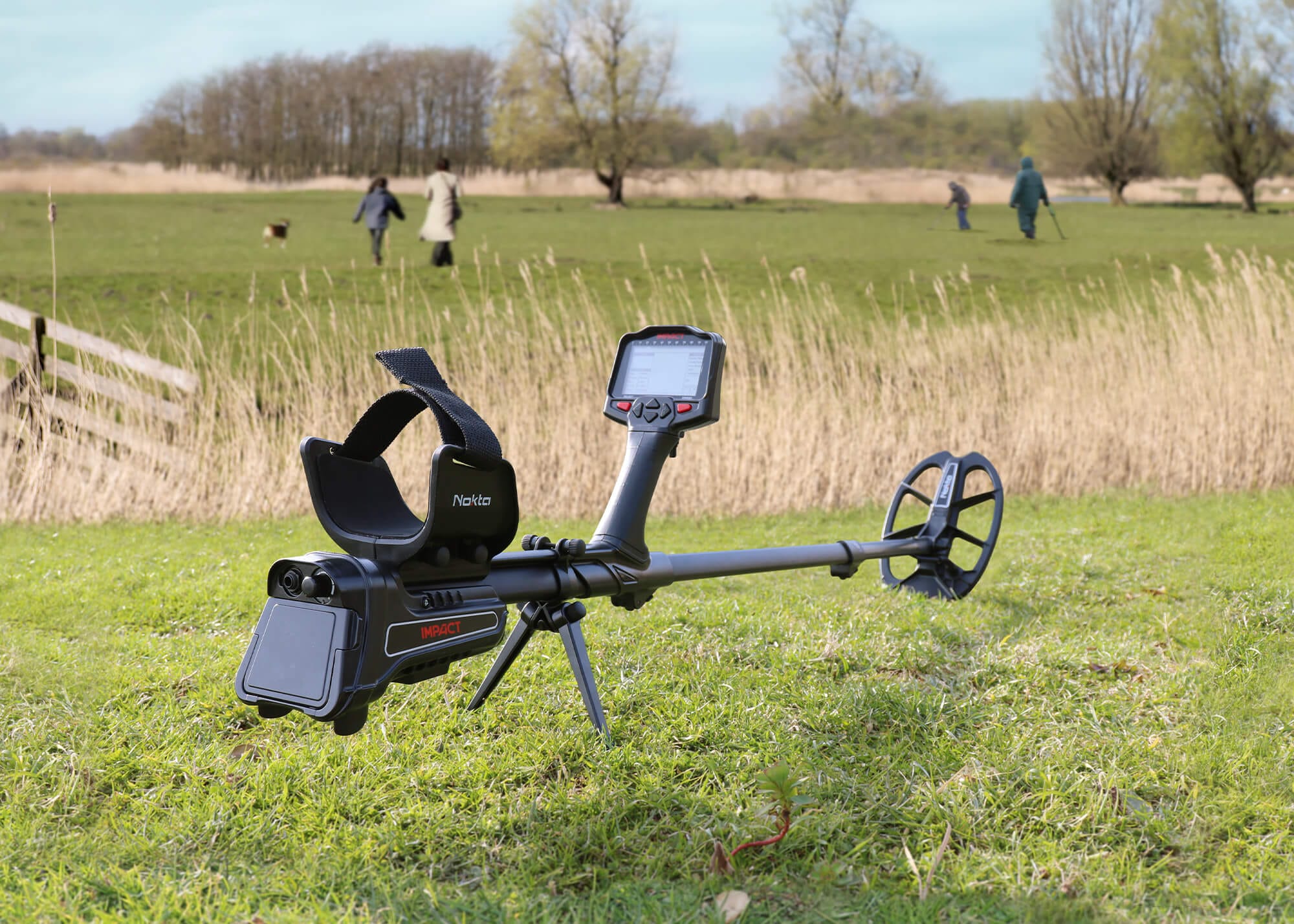
This question comes up several times a week, and it deserves a direct answer rather than a sales pitch: a metal detector cannot detect a diamond, an emerald, a ruby or any other gemstone. Not an expensive one, not an imaging system, not a long-range locator. The limitation is physical, not a matter of the machine's quality or price.
Why the physics rules it out
As covered in our explanation of how detection works, a detector induces eddy currents in a buried object and listens for the field those currents produce. Eddy currents require an electrically conductive material. Diamond is crystalline carbon and is an electrical insulator. Most coloured gemstones are likewise non-conductive mineral crystals. No conductivity means no eddy currents, which means no return signal, which means nothing for the detector to hear — at any depth, with any coil, at any price.
It is worth being blunt about the commercial side of this. The detector market has a long history of devices sold with claims of finding gemstones, buried treasure at extreme range, or targets through solid rock. Those claims do not survive controlled testing. If a seller tells you a machine finds diamonds, that tells you something useful about the seller.
What a detector can genuinely do for a gem hunter
The honest, useful version is indirect — and it is not worthless.
It finds the metal around the stone — A diamond ring, a gem-set pendant or a stone in a gold mount is detectable because the mount is metal. Jewellery recovery is one of detecting's most common successes.
It finds the indicator minerals' companions — In some geology, gem-bearing gravels also carry magnetic indicator minerals. A detector responding strongly to ground mineralisation can help you map where those gravels sit, which is a prospecting aid rather than a detection method.
It maps the ground structure — 3D imaging systems such as the Nokta Deephunter 3D Pro or the OKM EXP 6000 PRO+ image voids, cavities and buried structures. They are not detecting stones; they are showing you the shape of what is underground.
What to use instead for gemstones
Serious gemstone prospecting is a geological and mechanical process, not an electronic one. It relies on identifying the right host geology, then working the gravels — sieving, washing, and visual sorting, often with ultraviolet light for stones that fluoresce. A metal detector belongs in that toolkit only for recovering metal, and for helping you read the ground.
How to test a claim yourself
If a dealer demonstrates a machine finding a gemstone, ask for one specific thing: a blind test. Have a third party bury the stone, without the operator watching, in a location the operator does not know, and repeat it several times. Genuine detection survives that; suggestion and showmanship do not. We are happy to be held to the same standard on anything we sell.
We would rather lose a sale than take money for a machine that cannot do what a customer needs. If gemstones are your target, tell us — the answer may well be that you do not need a detector at all.